






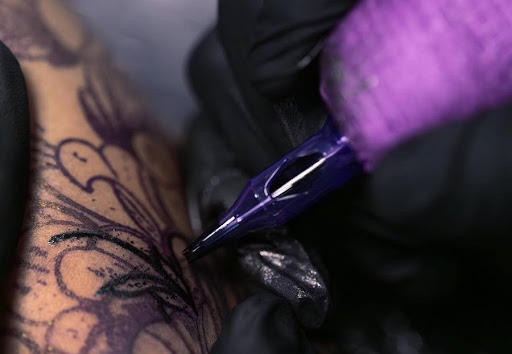
People are always looking for something permanent in their lives–and tattoos seem to be the ticket for a large number of them.
Tattoos are indelible reminders of important events in one’s life–deaths, births, military service. Other times, they have become artistic rendering on the canvas of one’s body.
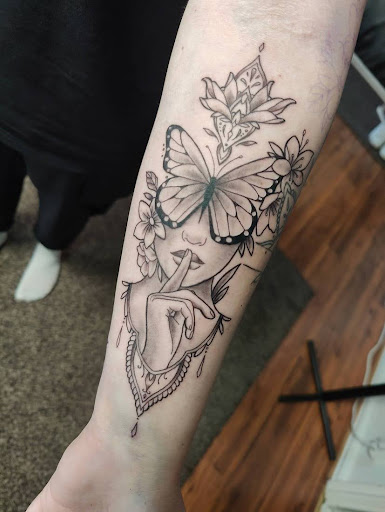 But, what are tattoos doing to one’s immune system? Recent studies are examining the correlation between tattoos and the weakening of the immune system. In fact, most of these studies say that tattoos compromise one’s immune system in various ways because it’s injected deeply into the skin. Once that occurs, the immune cells (macrophages) hurry to that location to “eat” the foreign ink, “but they cannot digest it.” Then, when these cells die, the ink is released once again and and “recaptured “by new macrophages–“keeping the immune system permanently engaged and altering how the body reacts to vaccines.”
Ms. Jodi Saville, a EHS foreign language teacher with a tattoo, isn’t buying all of the hype. She points out this: “Since tattoos are transdermal, they are exposed to the same layer of tissue as lipstick, foundation, eyeliner, etc. As I’m sure you know,” she goes on, “anything that is applied directly to the skin is absorbed by the body.” Lotion and perfume are two prime examples.
The opposing side counters, noting the fact that tattoo ink rapidly drains to the lymph nodes of the lymphatic system, resulting in immune cells being affected, as pubmed.ncbi.nlm.nih.gov informs. This is because when the tattoo ink gets into the lymph nodes, they undergo cell death, triggering persistent inflammation that can last for months. In testing this, an mRNA vaccination that occurred in the same spot of a tattoo was seen to not be as effective.
So, are tattoos an unwise decision? As Saville, asserts, “Tattoo ink is not the only substance that can have an impact on the effectiveness of vaccines.” As a case in point, she adds, “I was recently told to stop taking a particular medication, as it would interfere with the effectiveness of my tetanus shot.” Yet, neither the the shot nor the medication were not considered inadvisable. Additionally, she notes, if taking the proper steps when getting a tattoo, it can have minimal effects on the body.
pubmed.ncbi.nlm.nih.gov states that while mRNA vaccination can be weakened, it can actually improve the effectiveness of other types of vaccines. Thus, while tattoos can result in skin infections, proper sanitation and protective equipment can make the risk minimal, as mayoclinic.org suggests. What does this mean in the long run for those desiring a tattoo? In short, if proper precautions and research is done into who is applying the tattoo–and where–along with other factors, such as weight gain, tattoos are no more dangerous than the air one breathes.
Studies come and go. Tattoos, however, are here to stay. As with anything, just understanding the long-term effects and taking the proper precautions are the mark of engaging in a tattooing experience.