






In recent months, all that people seem to be talking about is the high price of gas at the pumps. And, while this is a true concern, there are other aspects about oil production that few are addressing: its impact on the environment.
To probe that topic, one must look at both the production and the consumption of oil.
But, before talking about the United State’s oil products, people need to better understand the fundamentals of oil. The first point to note is that oil is measured in sweetness–the amount of sulfur (the more sulfur, the less “sweet”). Secondly is the weight–the ease of refinement (the easier, the “sweeter”). Additionally, while most of the world makes heavier, bitter oil, the United States targets the production of sweet, light oil. And, the primary reason the United States imports any of its oil is due to cost. Simply put, it is cheaper to import the oil than to increase the number of refineries stateside. However, this can actually be 3 to 4.5 times worse for the environment than increasing the current capacity to refine the locally made oil.
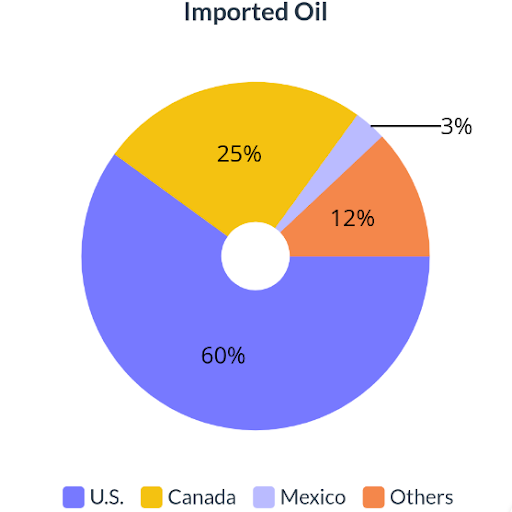
Because of heavy and bitter oil needing more refinement, it logically uses more power and water to refine it. On the surface, this doesn’t sound threatening. However, a deeper look reveals that the increased power and water use generates more byproducts–such as sulfur dioxide–creating a greater carbon footprint. Since the U.S. imports about 3,102,500,000 barrels of heavy and bitter oil annually, each of those barrels is damaging the surrounding environment more than the same number of barrels would if locally made and refined.
Sophomore Braxton Fultz reacts. “The reason this is a pressing issue we should be concerned about is the fact that just because something isn’t directly in front of us doesn’t mean it doesn’t affect us!” Continuing, he adds, “The balance of the environment globally is imperative due to the complex and fragile food chain, and species that environment supports.” Explaining even further, Fultz says, “If the environment is damaged by these oil refineries, it can cause massive depletion in food, shelter, and supplies for the inhabitants of that environment. But, another way this affects us is factors like tree populations becoming scarce due to environmental damage, possible environmental damages from waste production by the refinery, and many others that can affect us in the long term, even if it doesn’t affect us right now.”
While the U.S. arguably makes enough oil to handle the nation’s needs, it isn’t the type of oil that the country has adapted to use. As Nasdaq explains, “The problem is that for many years, imported oil met most of the U.S.’s energy needs, so a large percentage of the refining capacity here is geared towards dealing with oil that is heavier and less sweet than the kind produced here.”
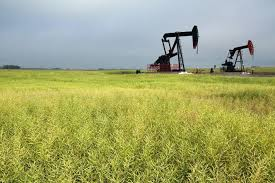
This helps reinforce the idea that the U.S. imported oil for such a long time the a great deal of refining capacity it has isn’t able to process the lighter and sweeter oil made here. American Fuel & Petrochemical Manufacturers clarifies, saying, “Re-tooling refineries to process solely U.S. crude oil (light crude) would cost billions–a risky investment that would take decades to permit, construct and eventually pay off.” This supports the notion of how the effort and cost of converting the U.S. refineries here outweighs the jump in oil costs over the long term. Knowing what it can do to the environment, Fultz has this concern about what the U.S. imports: “If we are in trade with another country, why would they give us the best stuff?”
In fact, there are myriad hazards to the environment posed by any type of oil use–both to people and animals. However, as noted before, heavy oil is more negatively impactful, making the sweet oil more eco-friendly. As United States Commodity Funds suggests, “These crude oils are highly sought after [light, sweet crude oil] in global markets due to their efficiency and lower environmental impact during refining….Refining heavy sour crude is more costly and can raise environmental concerns because of the additional steps required to remove impurities.”
The Environmental and Energy Study Institute another critical environmental factor: air pollution. “Fossil Fuels produce hazardous air pollutants, including sulfur dioxide, nitrogen oxides, particulate matter, carbon monoxide, and mercury, all of which are harmful to the environment and human health.” BKV Energy backs this up by saying, “The burning of oil, whether from power generation, automobiles, boats, trains, or industrial activity, is a major producer of airborne pollution. ” Continuing, the organization adds, “This pollution is responsible for an increase in disease and mortality around the world. Exposure to an increase amount of airborne particulates resulting from the burning of crude oil, petroleum, and oil-derived products directly correlates to an increased risk in disease of the heart and lungs especially.”
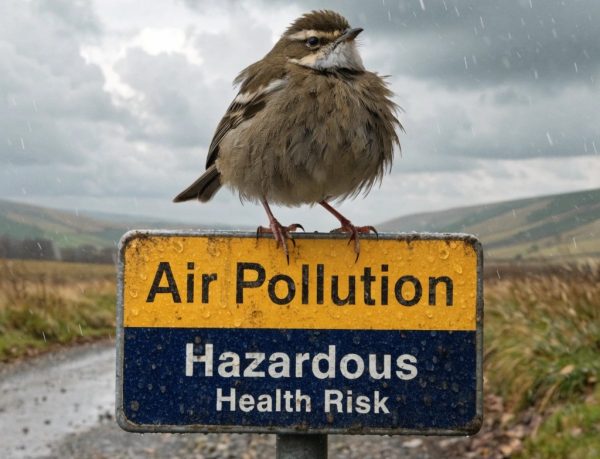
What both of these sources are highlighting is how the pollution caused from burning oil products affects air quality. It creates a domino effect of disaster–from climate change to ecosystem degradation…to damaging wildlife and biodiversity…to a depleting the ozone and agricultural growth. Sophomore Curtis Knight agrees. “I think that’s true: whether its’ deep scale mining or the CO2 carbon emissions.” Classmate Orbin Buell echoes this sentiment. “That makes it even worse.”
By importing heavy oil–roughly 40% of its oil supply–the United States is damaging the environment far more than necessary. While it may save money, it is doing nothing to save the planet. Therefore, this nation needs to begin investing in its future by reducing its consumption of heavy, bitter oil and opting for something sweeter.