





The May 2 Kentucky Derby kicks off the race for the triple crown; however, for two-legged runners, the trifecta of marathons just concluded with the April 26 London Marathon.
 From March to April, the best-of-the-best marathon runners from around the world compete in Tokyo, Boston, or London–but never all three. The reason is simply that back-to-back races that each cover 26.2 miles require more recovery time. Instead, their aim is to compete once in the spring and once in the fall, when another set of three marathons is scheduled.
 Despite the three race locations covering three different continents, 2026 winners in both the men’s and women’s divisions have all come from a single, additional continent: Africa–Kenya and Ethiopia, specifically. Moreover, the goal of these runners is not to simply cross the line first but to do so in record-breaking speed. This year, Kenyan Sabastian Sawe made history at the London Marathon with a record time of 1:59:30, the first to finish in under two hours.
This is a far cry from finish times a century ago. For instance, in the 130 years of the Boston Marathon–which took place on April 20 this year–competitors have shaved nearly a full hour off of the winning time. In 1897, American John McDermott finished at 2:55:10. This year, John Korir of Kenya clocked in at 2:01:52, making it an interesting Patriots Day for the 30,000-34,000 participants.
 Yet, the milestones to this particular marathon are storied. One of the most notable occurred in 1966, when Bobbi Gibb became the first woman to finish the race. At the time, women were not considered “physiologically” capable of running a marathon. Gibb proved the world wrong, when disguised as a male runner, she literally jumped into the race, finishing well ahead of the pack with a time of 3:27:17. Although not a winning time, Gibb won women the right to compete in their own division, which became fully established in 1972. This year’s winner (from Kenya) finished at 2:18:51.
Continuing with ground-breaking advancements, the Boston Marathon also became the first major marathon to establish wheelchair competitions. This occurred in 1975, recognizing Bob Hall from the U.S. as the first winner. Hall, who suffered the effects of polio, had to convince organizers that he could cross the finish line in under three hours. His time was 2:58:00. This year, Swiss competitor Marcel Hug won the men’s title, while Eden Rainbow of Great Britain took the women’s title.
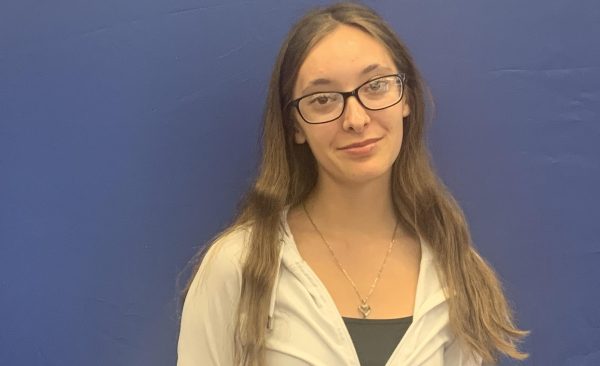
Clearly, these major marathons are about pushing one’s self beyond their limits. Going the distance requires “consistency, persistence, and lots of training.” Jordan Powell, a Sophomore and former athlete at Elkhart High School, has an understanding of non-stop running. Powell shares how to get through such a run: “Having a positive mindset and focusing on the end goal…and lots of self-encouragement!”
Yet, is she up for the challenge? “I would say I am pretty athletic, so I believe I could participate if I were given the chance,” Powell asserts. She believes it would be “cool” and how she would be “honored” to do so. Yet, Powell is well aware of the extensive training that one must have to physically take on such a challenge.
Noting that she would feel “tired” and “nervous“ if she were in the race, Powell adds with great tenacity, “l would keep going anyways, because I don’t like to quit. I think the others would feel the same way, although some may give up.”
Quitting is never the answer. Giving up may be easy, but never giving up is harder. It builds character. As they say, “It always seems impossible until it is done!”